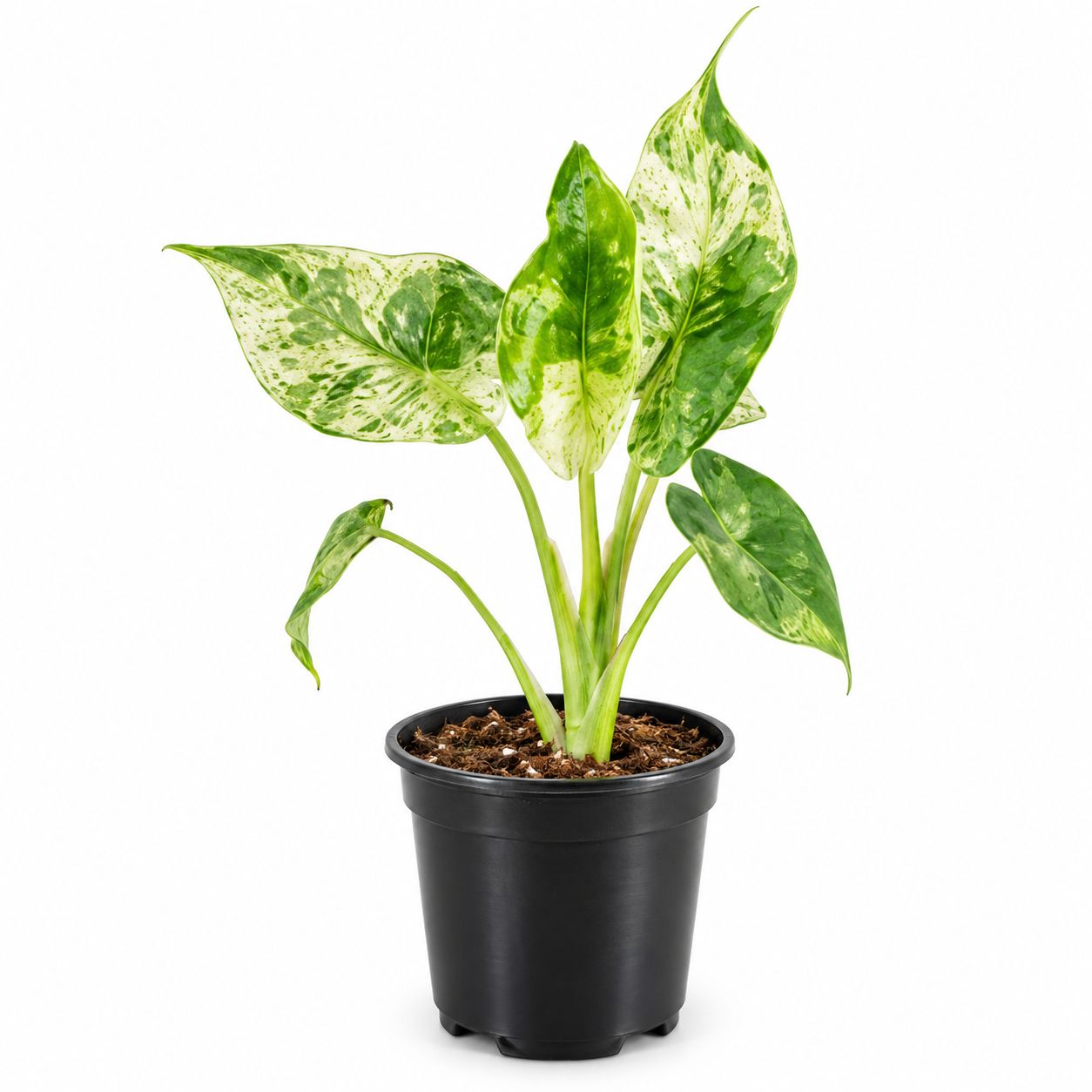
Alocasia Camouflage - 4"
$24.99
In stock: 7 available
Alocasia Camouflage - 4"
Product Details
CUSTOM_SKU: 4ALOCAM15
Alocasia Camouflage – 4"
A distinctive tropical houseplant prized for its bold, camouflage-like foliage and upright architectural form. Alocasia Camouflage features broad, arrow-shaped leaves patterned with irregular shades of green, cream, and pale yellow, giving each leaf a unique marbled appearance. Its compact 4-inch size delivers plenty of visual impact without requiring much space, making it an eye-catching choice for desks, shelves, plant cabinets, tabletops, and tropical plant collections.
Key Features
- Striking arrow-shaped foliage with unique camouflage-style green and cream patterning
- Each leaf develops naturally individual markings and color variations
- Upright growth habit creates a bold, sculptural tropical appearance
- Compact 4-inch size is ideal for shelves, desks, tabletops, and plant cabinets
- Eye-catching foliage makes an excellent addition to Alocasia and tropical plant collections
Plant Care Instructions
- Light: Prefers bright, indirect light to maintain healthy growth and attractive foliage coloration. Avoid prolonged harsh direct sunlight, which may scorch the leaves.
- Water: Keep the soil moderately moist during active growth, allowing the top 2–3 cm to dry slightly before watering again. Avoid soggy soil and standing water.
- Soil: Use a loose, airy, well-draining aroid mix containing materials such as quality potting soil, orchid bark, coco coir, and perlite.
- Humidity: Thrives in moderate to high humidity, ideally around 60% or higher. Good air circulation is also important for healthy foliage.
- Temperature: Prefers warm conditions of approximately 18–29°C. Protect from cold drafts, air-conditioning vents, and prolonged temperatures below 15°C.
- Fertilizer: Feed every 3–4 weeks during spring and summer with a balanced liquid houseplant fertilizer diluted according to label directions. Reduce feeding during slower growth.
- Maintenance: Gently wipe foliage with a soft, damp cloth when dusty and rotate the plant periodically for balanced growth. Alocasias may naturally slow down or lose older leaves during periods of reduced light or cooler conditions.
- Pruning: Remove yellowing, damaged, or declining leaves near the base with clean tools. Extensive pruning is generally unnecessary.
- Repotting: Repot every 1–2 years or when roots become crowded, using a slightly larger container with excellent drainage.
Note: Foliage pattern, coloration, leaf size, and plant fullness may naturally vary from the product image. Plant pot may also vary in design. Most plants come in a one-time-use plastic grower pot.
Display prices in:CAD