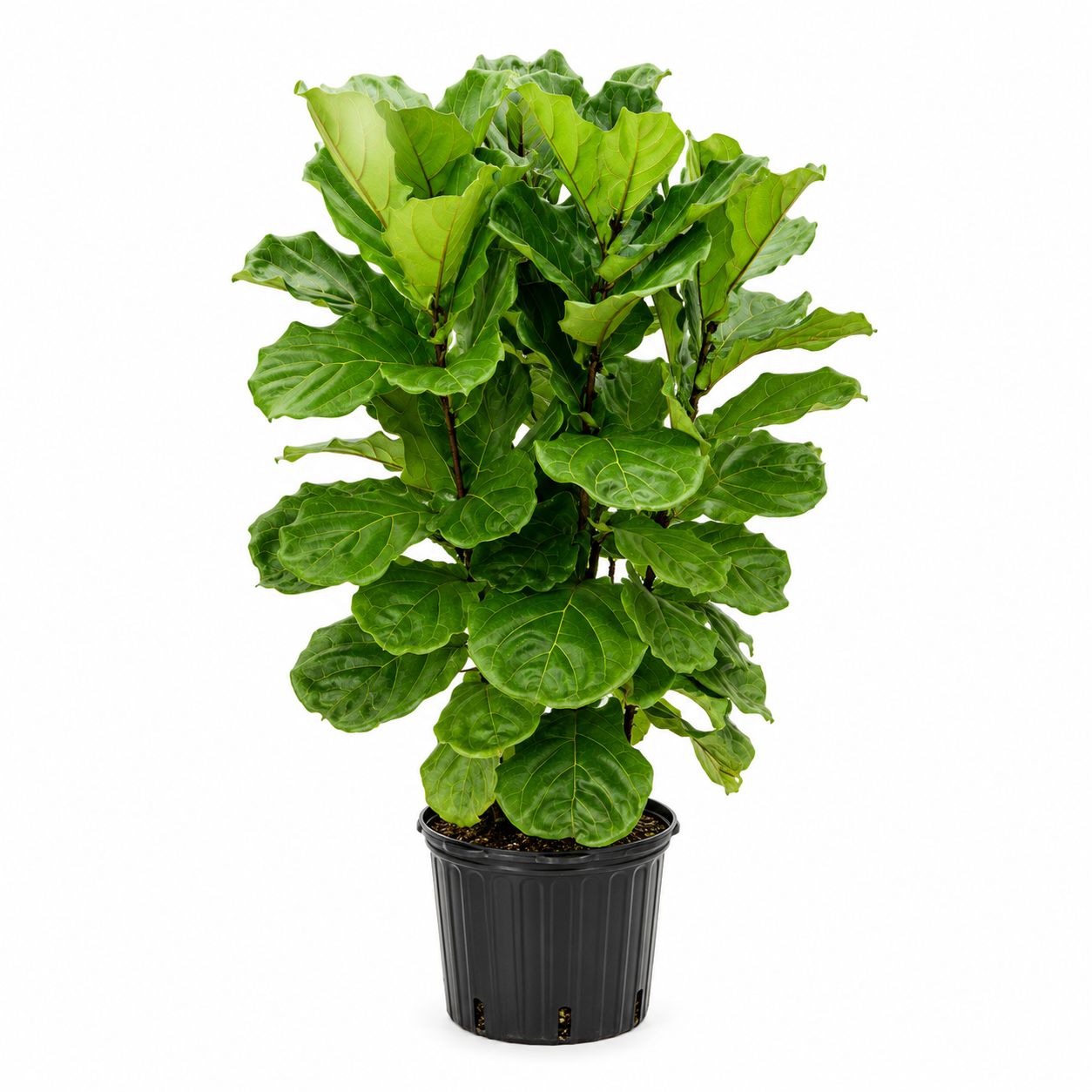
Ficus Lyrata Bush - 14"
$149.99
In stock: 1 available
1
Ficus Lyrata Bush - 14"
Product Details
CUSTOM_SKU: V2929LB
Ficus Lyrata Bush – 14"
A bold tropical statement plant known for its oversized, violin-shaped leaves and lush, full-bodied growth. Ficus Lyrata, commonly called the Fiddle Leaf Fig, features broad, glossy green foliage with prominent veining and gently rippled edges. Grown in a dense bush form, this impressive 14-inch specimen delivers substantial greenery and architectural presence, making it an excellent focal point for living rooms, offices, entryways, reception areas, and spacious interiors.
Key Features
- Large, violin-shaped leaves with rich green color and prominent natural veining
- Dense bush form creates a fuller appearance than a traditional single-trunk Fiddle Leaf Fig
- Bold architectural foliage provides an impressive tropical focal point
- Substantial 14-inch size is well suited for floor displays and larger indoor spaces
- Excellent statement plant for living rooms, offices, entryways, and commercial interiors
Plant Care Instructions
- Light: Prefers abundant bright, indirect light and can benefit from gentle morning sunlight. Avoid sudden exposure to intense direct sun, which may scorch the foliage.
- Water: Allow the top 3–5 cm of soil to dry before watering thoroughly. Let excess water drain completely and avoid leaving the plant sitting in standing water.
- Soil: Use a fertile, well-draining indoor potting mix amended with perlite, bark, or similar material to provide good root aeration.
- Humidity: Prefers moderate humidity and consistent growing conditions. Keep away from excessively dry heating vents and strong drafts.
- Temperature: Thrives at approximately 18–27°C. Protect from sudden temperature fluctuations and prolonged temperatures below 13°C.
- Fertilizer: Feed every 4–6 weeks during spring and summer with a balanced houseplant fertilizer according to label directions. Reduce feeding during slower winter growth.
- Maintenance: Wipe the large leaves periodically with a soft, damp cloth to remove dust and improve light absorption. Rotate the plant occasionally for balanced growth while avoiding frequent relocation.
- Pruning: Remove damaged or declining foliage with clean tools. Selective stem pruning can help maintain the desired height and encourage a fuller, more branched shape.
- Repotting: Repot every 2–3 years or when the plant becomes noticeably root-bound. Choose a sturdy container only slightly larger than the existing pot and ensure excellent drainage.
Note: Plant height, fullness, leaf size, and growth habit may naturally vary from the product image. Plant pot may also vary in design. Most plants come in a one-time-use plastic grower pot.
Display prices in:CAD