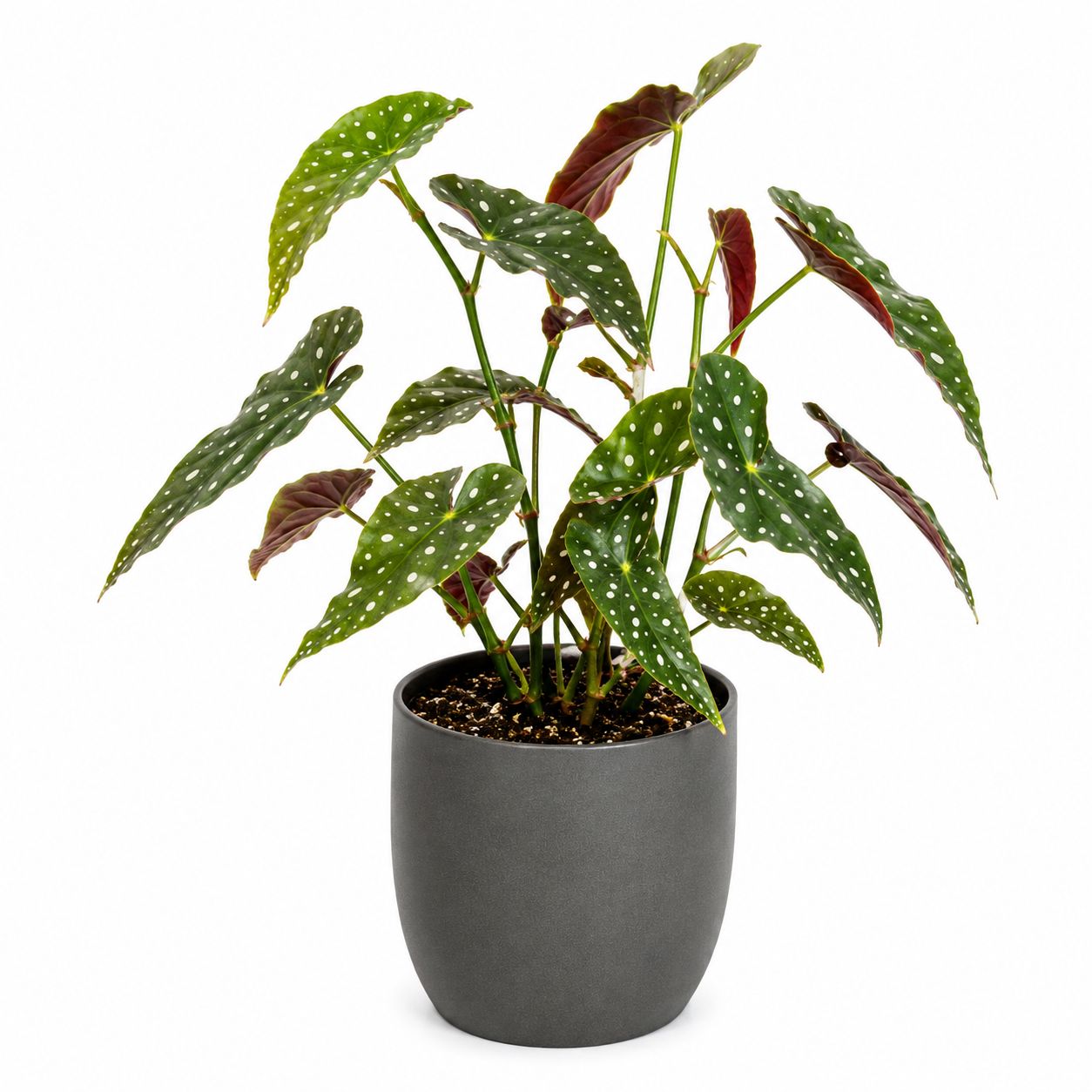
Begonia Maculata - 6"
$39.99
In stock: 1 available
Begonia Maculata - 6"
Product Details
CUSTOM_SKU: 2299FF
Begonia Maculata – 6"
A striking tropical houseplant celebrated for its unmistakable spotted foliage and elegant upright growth. Begonia Maculata, commonly known as the Polka Dot Begonia, features elongated green leaves decorated with silvery-white spots and beautifully contrasting reddish to burgundy undersides. Its larger 6-inch size creates a fuller, more established display, making it an eye-catching choice for tabletops, plant stands, shelves, offices, and tropical indoor plant collections.
Key Features
- Distinctive elongated green leaves covered with contrasting silvery-white polka dots
- Reddish to burgundy leaf undersides add rich color and visual dimension
- Upright, cane-like growth develops into an elegant and architectural display
- Can produce delicate clusters of white to pale pink flowers under favorable conditions
- Full 6-inch size provides excellent presence for tabletops, shelves, and plant stands
Plant Care Instructions
- Light: Prefers bright, indirect light to maintain vibrant foliage and encourage healthy growth. Avoid harsh direct sunlight, which can scorch the leaves.
- Water: Water when the top 2–3 cm of soil begins to dry. Keep the soil moderately moist during active growth without allowing it to become soggy or waterlogged.
- Soil: Use a light, airy, well-draining potting mix rich in organic matter. Adding perlite or fine bark can improve drainage and root aeration.
- Humidity: Appreciates moderate to high humidity with good air circulation. Avoid leaving the foliage consistently wet, as excess moisture on the leaves can encourage fungal problems.
- Temperature: Thrives at approximately 18–27°C. Protect from cold drafts, sudden temperature changes, and prolonged temperatures below 15°C.
- Fertilizer: Feed every 3–4 weeks during spring and summer with a balanced liquid houseplant fertilizer diluted to half strength. Reduce feeding during periods of slower growth.
- Maintenance: Rotate periodically to encourage balanced growth and provide a stake or other support if taller canes begin to lean. Remove fallen foliage and debris from the soil surface.
- Pruning: Pinch or trim growing tips to encourage branching and a fuller, bushier appearance. Remove damaged, yellowing, or declining leaves using clean scissors.
- Repotting: Repot every 1–2 years or when roots become crowded, preferably during spring. Choose a slightly larger container with adequate drainage.
Note: Foliage color, spotting, and growth may naturally vary from the product image. Plant pot may also vary in design. Most plants come in a one-time-use plastic grower pot.
Display prices in:CAD