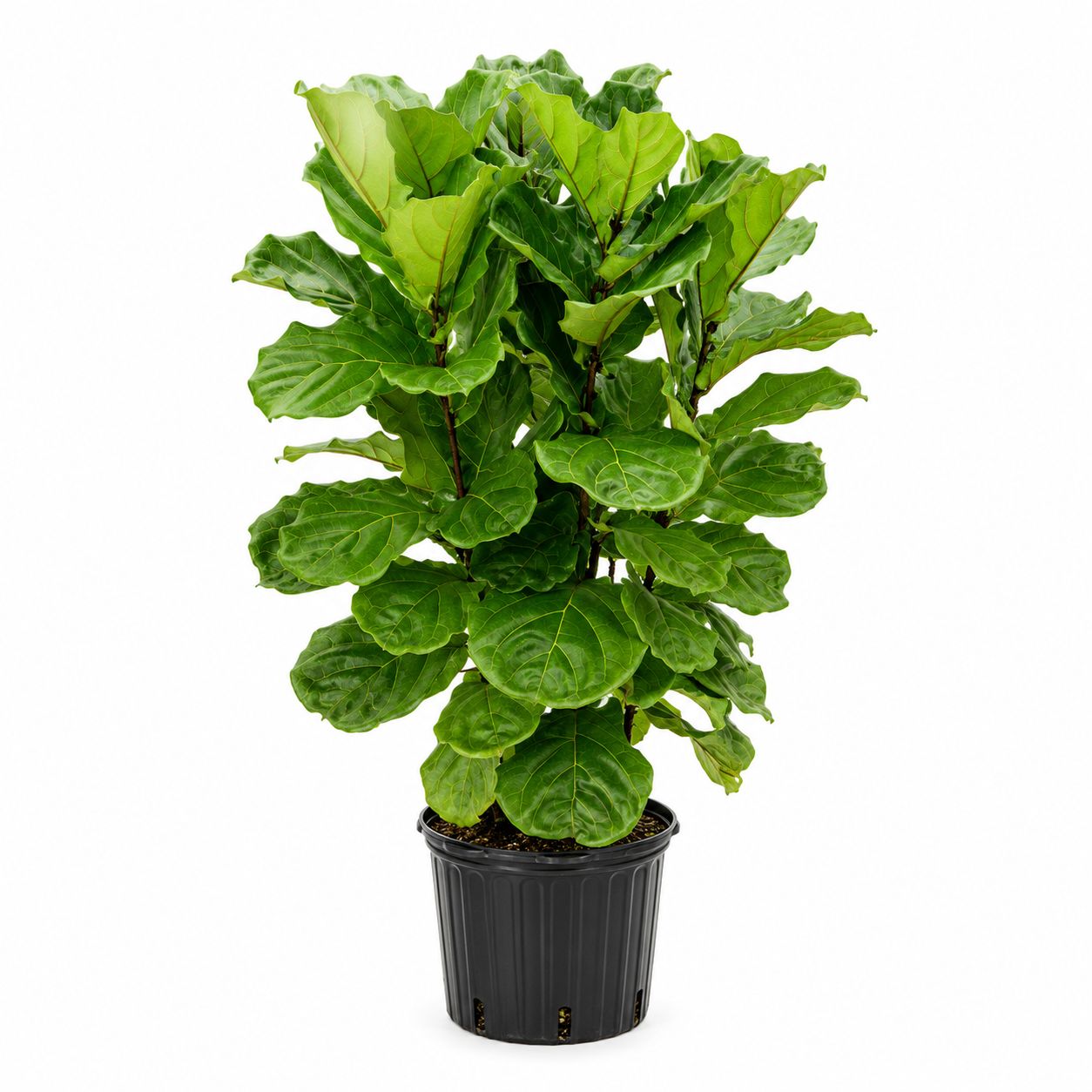
Ficus Lyrata - Bush - 14''
$259.99
Sold out
Sold out
Ficus Lyrata - Bush - 14''
Product Details
CUSTOM_SKU: 14FICLYB
Ficus Lyrata Bush – 14"
A bold and sophisticated tropical statement plant prized for its large, sculptural foliage and lush, bushy form. Ficus Lyrata, commonly known as the Fiddle Leaf Fig, produces broad, violin-shaped leaves with prominent veining and a rich, glossy green appearance. Grown in a full multi-stem bush form, this substantial 14-inch plant creates impressive volume and architectural presence, making it an outstanding focal point for living rooms, offices, entryways, reception areas, and spacious interiors.
Key Features
- Large, distinctive fiddle-shaped leaves with prominent veining and rich green color
- Bushy, multi-stem growth creates a dense and impressive tropical display
- Bold architectural foliage makes a sophisticated statement in larger indoor spaces
- Substantial 14-inch size is ideal for floor displays, living rooms, offices, and entryways
- Can develop into an impressive indoor specimen when provided with consistent bright light and care
Plant Care Instructions
- Light: Prefers abundant bright, indirect light and can benefit from some gentle direct morning sun. Avoid sudden exposure to intense sunlight, which may scorch the foliage.
- Water: Allow the top 3–5 cm of soil to dry before watering thoroughly. Let excess water drain completely and avoid keeping the soil constantly wet or allowing the plant to sit in standing water.
- Soil: Use a fertile, loose, well-draining indoor potting mix with added perlite or bark to promote healthy root aeration and drainage.
- Humidity: Appreciates moderate humidity and consistent conditions. Keep away from excessively dry heating vents and provide good air circulation.
- Temperature: Thrives at approximately 18–27°C. Protect from cold drafts, sudden temperature changes, and prolonged temperatures below 13°C.
- Fertilizer: Feed every 4–6 weeks during spring and summer with a balanced houseplant fertilizer diluted according to label directions. Reduce feeding during slower winter growth.
- Maintenance: Wipe the broad leaves periodically with a soft, damp cloth to remove dust and maximize light absorption. Rotate the plant occasionally for balanced growth, but avoid frequent changes in location.
- Pruning: Remove damaged or declining leaves with clean tools. Stems can be selectively pruned to control height and encourage branching while maintaining a full, bushy shape.
- Repotting: Repot every 2–3 years or when noticeably root-bound, using a sturdy container only slightly larger than the existing pot and ensuring excellent drainage.
Note: Plant height, fullness, leaf size, and growth habit may naturally vary from the product image. Plant pot may also vary in design. Most plants come in a one-time-use plastic grower pot.
Display prices in:CAD