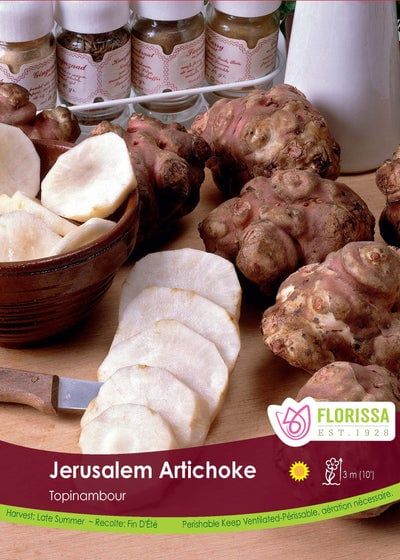
Artichoke – Jerusalem (Sunchoke)
Jerusalem Artichokes, also known as Sunchokes, are a hardy and productive perennial vegetable grown for their delicious underground tubers. Despite the name, they are not true artichokes but a member of the sunflower family. The plants produce tall stems with cheerful yellow sunflower-like blooms while developing knobby, potato-like tubers beneath the soil.
Jerusalem artichokes have a crisp texture and a mild, nutty flavor often compared to a cross between potatoes and water chestnuts. They can be eaten raw in salads for a crunchy bite or cooked by roasting, sautéing, boiling, or adding to soups. Their unique flavor and versatility make them a favorite for gardeners and adventurous cooks alike.
These vigorous plants are extremely hardy and easy to grow, producing abundant harvests year after year. Once established, they return reliably each season, making them an excellent low-maintenance crop for northern gardens.
Growing Instructions (Zone 3b)
Jerusalem artichokes are very cold hardy and well suited to northern climates like Zone 3b.
- Planting Time: Plant tubers in early spring once the soil can be worked, typically late April to May in Zone 3b.
- Sun: Full sun is best for strong growth and maximum tuber production.
- Soil: Plant in loose, well-drained soil with moderate fertility. They tolerate a wide range of soil types.
- Planting Depth: Plant tubers about 3–5 inches deep.
- Spacing: Space tubers 12–18 inches apart in rows 24–36 inches apart.
- Watering: Water regularly during establishment; once established they are fairly drought tolerant.
- Growth Habit: Plants can grow 6–10 feet tall and may benefit from wind protection or staking.
- Harvest: Tubers are ready in late fall after the first frost, which improves their flavor. Dig as needed through fall or the following spring if the ground is workable.
- Maintenance: Leave a few tubers in the ground each year to regrow the next season.
Jerusalem artichokes are highly productive and can spread easily, so many gardeners dedicate a specific garden area to this hardy perennial crop.