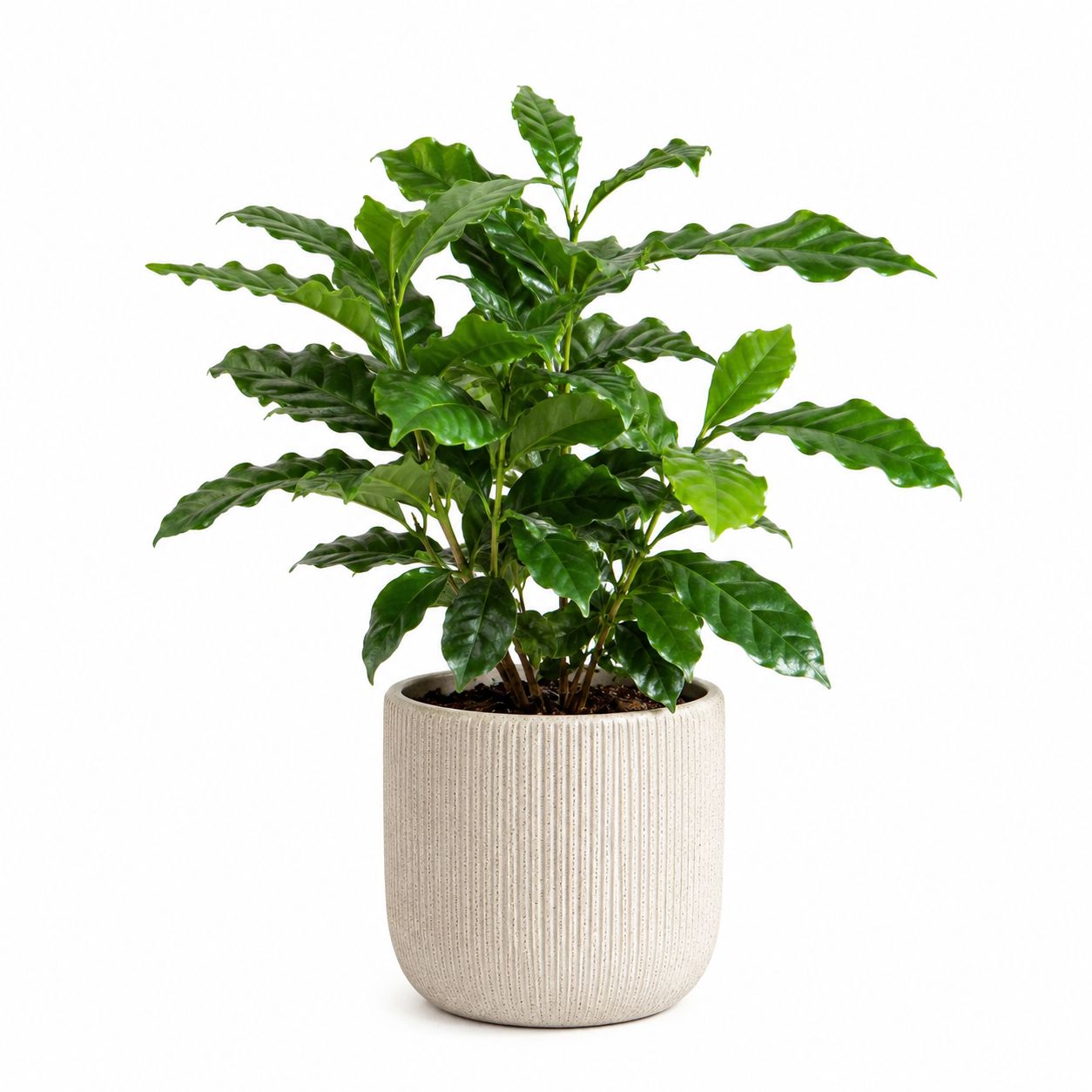
Coffee Plant - 6"
$24.99
In stock: 5 available
1
Coffee Plant - 6"
Product Details
CUSTOM_SKU: 6COFPLA8
Coffee Plant (Coffea arabica) – 6"
A lush tropical houseplant admired for its glossy, deep green foliage and elegant upright growth habit. Coffee Plant (Coffea arabica) features beautifully textured leaves with gently wavy edges, creating a full and vibrant display that brings a fresh, tropical feel to indoor spaces. Best known as the plant that produces Arabica coffee beans, it combines ornamental beauty with botanical interest, making it a conversation-worthy addition to homes, offices, shelves, and tabletop displays.
Key Features
- Glossy, deep green leaves with attractive gently wavy edges
- Upright, well-branched growth habit creates a lush tropical appearance
- Compact 6" size ideal for tabletops, shelves, plant stands, and office displays
- Evergreen foliage provides attractive color and texture throughout the year
- Fascinating tropical species known as the source of Arabica coffee beans
Plant Care Instructions
- Light: Prefers bright, indirect light. Gentle morning sun can be beneficial, but protect the foliage from prolonged intense direct sunlight.
- Water: Keep the soil consistently and lightly moist, allowing the top 2–3 cm to dry slightly before watering again. Avoid allowing the plant to sit in standing water.
- Soil: Use a rich, slightly acidic, well-draining potting mix with plenty of organic matter. Good drainage is essential for healthy root growth.
- Humidity: Thrives in moderate to high humidity. A humidifier can be beneficial in dry indoor environments and may help prevent brown or crispy leaf edges.
- Temperature: Prefers warm conditions between approximately 18–27°C. Protect from cold drafts, sudden temperature changes, and temperatures below approximately 13°C.
- Fertilizer: Feed every 4–6 weeks during spring and summer with a balanced or slightly acidic houseplant fertilizer. Reduce feeding during fall and winter.
- Maintenance: Wipe the glossy leaves periodically to remove dust and rotate the plant for balanced growth. Maintain consistent moisture and humidity for the best foliage quality.
- Pruning: Trim overly long or leggy stems during active growth to maintain a compact shape and encourage fuller branching. Remove yellow or damaged leaves as needed.
- Repotting: Repot every 1–2 years or when roots become crowded. Move into a container slightly larger than the existing pot and refresh with a rich, well-draining potting mix.
Note: Plant size, fullness, branching, foliage color, and overall appearance may vary naturally from the product image. Decorative pot design and color may also vary. Most plants are supplied in a one-time-use plastic grower pot.
Display prices in:CAD