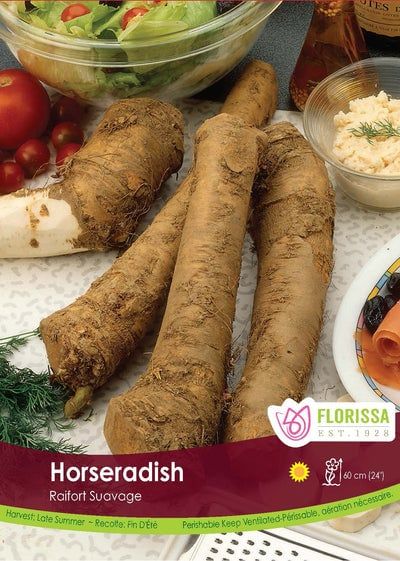
Horseradish
Product Details
UPC: 774431101253
CUSTOM_SKU: 340-120-01
Horseradish
Grow your own bold, flavorful condiment with hardy Horseradish. This vigorous perennial root vegetable is prized for its pungent, spicy flavor and is commonly used to make fresh horseradish sauce, a classic accompaniment for meats, seafood, and sandwiches. The large roots develop a strong, zesty heat when grated, offering far more flavor than store-bought varieties.
Horseradish plants produce large, lush green leaves during the growing season while developing thick, flavorful roots underground. Extremely hardy and easy to grow, horseradish thrives in colder climates and returns year after year when left in the garden. It’s an excellent addition to vegetable gardens and can also be grown in contained beds to manage its spreading habit.
Plant Details
Plant Type: Edible Perennial Root
Root Color: Creamy white interior with tan outer skin
Flavor: Strong, spicy, and pungent when grated
Plant Height: 24–36 inches
Harvest Time: Fall after frost
Sun Requirements: Full Sun to Partial Sun
Uses: Fresh grated condiment, sauces, pickling, and cooking
Growing Instructions for Zone 3b
Horseradish is extremely hardy and grows very well in cold climates like Zone 3b.
Planting Time
Plant horseradish roots in early spring as soon as the soil can be worked.
Location
Choose a sunny location with well-drained, fertile soil. Horseradish grows best in loose soil that allows the roots to expand easily.
Planting Depth
- Plant root cuttings at a 45° angle with the top about 2 inches below the soil surface.
- Cover with soil and water thoroughly.
Spacing
Space plants 18–24 inches apart to allow room for root development.
Watering
Water regularly to keep soil evenly moist while plants are establishing. Mature plants tolerate some drought but grow best with consistent moisture.
Fertilizing
Apply compost or a balanced fertilizer in spring to support vigorous root growth.
Harvesting
- Roots are best harvested in late fall after frost, when flavor is strongest.
- Dig up large roots and replant small root pieces to produce the next season’s crop.
Winter Care in Zone 3b
- Horseradish is extremely winter hardy and can remain in the ground through winter.
- Mulch lightly if desired, though the plant typically survives cold conditions easily.
With proper care, horseradish will provide years of flavorful harvests and can become a reliable perennial crop in the garden.
Display prices in:CAD