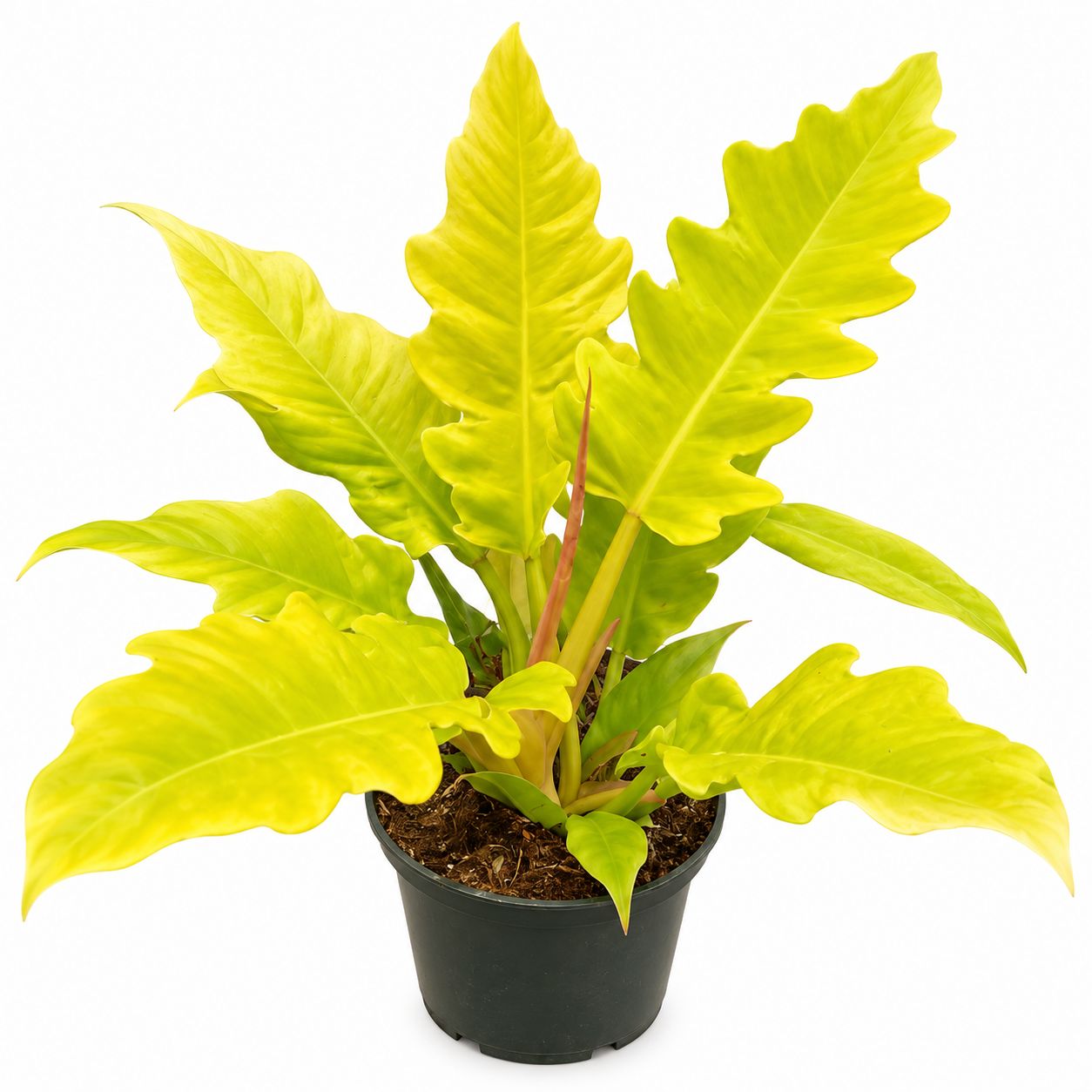
Philodendron Golden Crocodile - 6"
$34.99
Sold out
Sold out
Philodendron Golden Crocodile - 6"
Product Details
CUSTOM_SKU: V2257B
Philodendron Golden Crocodile – 6"
A spectacular tropical houseplant prized for its brilliant golden foliage and dramatically textured leaf shape. Philodendron Golden Crocodile produces long, narrow leaves with deeply serrated, irregular edges reminiscent of a crocodile’s silhouette. New growth emerges in luminous yellow to golden-chartreuse tones before gradually developing greener shades as it matures, creating a vibrant, layered display. Its distinctive foliage and substantial 6-inch size make it an exceptional statement plant for shelves, plant stands, desks, and tropical indoor collections.
Key Features
- Distinctive elongated leaves with deeply serrated, crocodile-like edges
- New foliage emerges in brilliant yellow to golden-chartreuse shades
- Leaves gradually develop greener tones as they mature, creating attractive color contrast
- Upright, sculptural growth provides bold tropical texture and architectural interest
- Eye-catching 6-inch plant ideal for collectors, shelves, plant stands, and statement displays
Plant Care Instructions
- Light: Prefers bright, indirect light to support vigorous growth and vibrant golden coloration. Avoid prolonged harsh direct sunlight, which may scorch the foliage.
- Water: Allow the top 3–5 cm of soil to dry before watering thoroughly. Let excess moisture drain completely and avoid keeping the root zone constantly wet.
- Soil: Use a loose, airy, well-draining aroid mix containing quality potting soil, orchid bark, and perlite or similar materials.
- Humidity: Appreciates moderate to high humidity, ideally around 50% or higher, with good air circulation for healthy foliage development.
- Temperature: Thrives at approximately 18–29°C. Protect from cold drafts, sudden temperature changes, and prolonged temperatures below 13°C.
- Fertilizer: Feed every 4–6 weeks during spring and summer with a balanced liquid houseplant fertilizer diluted according to label directions. Reduce feeding during slower winter growth.
- Maintenance: Gently wipe foliage with a soft, damp cloth when dusty and rotate the plant periodically for balanced growth. Provide adequate space for the elongated leaves to develop without crowding.
- Pruning: Remove yellowing, damaged, or declining leaves near the base using clean tools. Extensive pruning is generally unnecessary.
- Repotting: Repot every 1–2 years or when roots become crowded, using a slightly larger container with excellent drainage.
Note: Foliage color, leaf shape, size, and plant fullness may naturally vary from the product image. Plant pot may also vary in design. Most plants come in a one-time-use plastic grower pot.
Display prices in:CAD