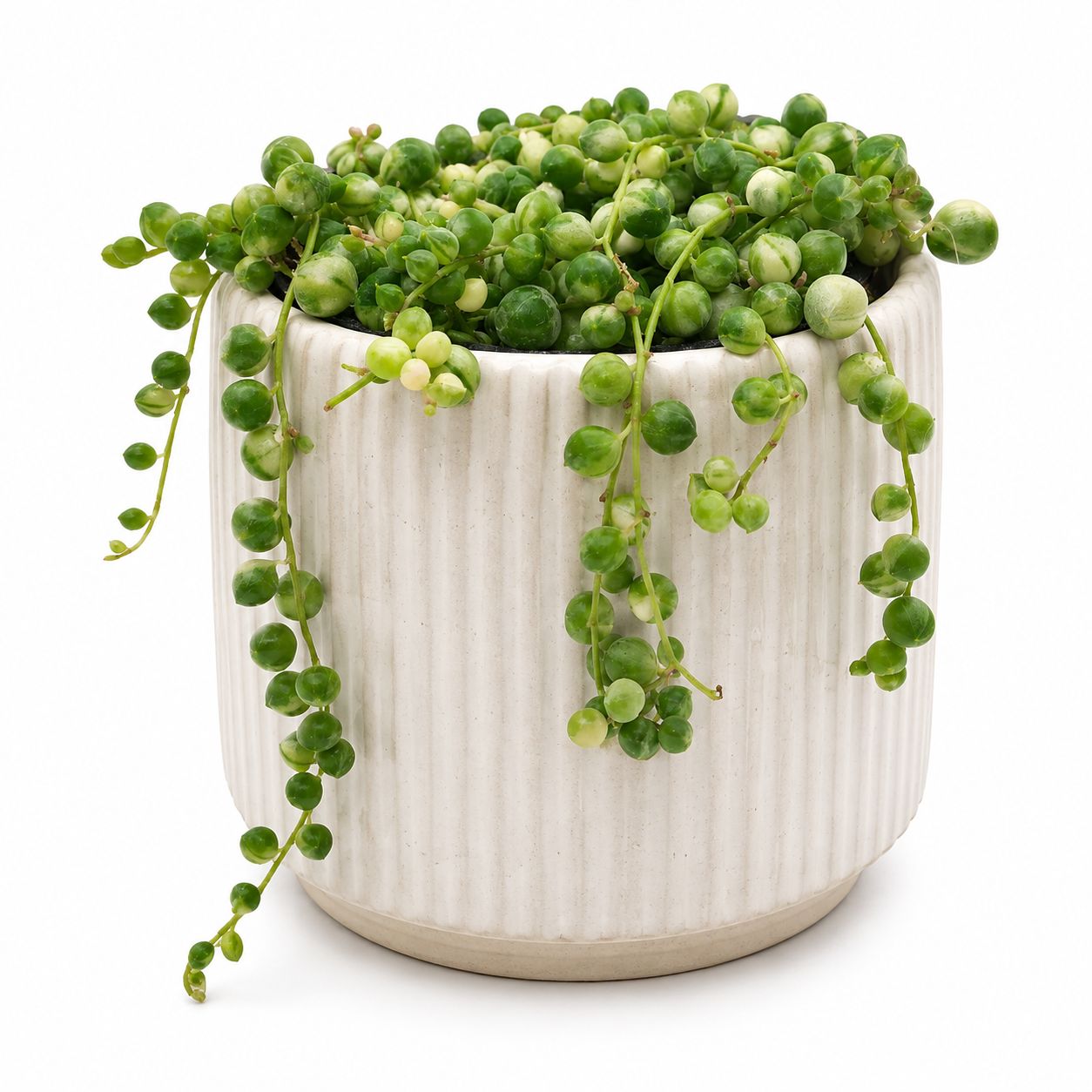
String of Pearls - 4"
$14.99
In stock: 7 available
1
String of Pearls - 4"
Product Details
CUSTOM_SKU: 4STRPEA15
String of Pearls – 4"
A captivating trailing succulent loved for its delicate strands of round, bead-like foliage. String of Pearls produces slender cascading stems lined with plump green leaves resembling tiny pearls, creating a beautiful waterfall effect as the plant matures. Its unusual texture, compact 4-inch size, and graceful trailing habit make it a standout choice for bright shelves, windowsills, plant stands, and hanging displays.
Key Features
- Distinctive spherical green leaves resembling a cascading string of pearls
- Graceful trailing stems create an attractive waterfall-like display
- Compact 4-inch size ideal for shelves, windowsills, and elevated plant arrangements
- Drought-tolerant succulent foliage stores moisture between waterings
- Unique shape and texture make it an eye-catching addition to succulent collections
Plant Care Instructions
- Light: Provide plenty of bright, indirect light. A few hours of gentle morning or late-afternoon sun can encourage dense, healthy growth.
- Water: Allow the soil to dry well between waterings, then water thoroughly and let excess moisture drain away. Avoid consistently wet soil, as String of Pearls is particularly sensitive to overwatering.
- Soil: Use a loose, gritty, fast-draining cactus or succulent potting mix. Good drainage is essential for healthy roots.
- Humidity: Average to low household humidity is preferred. Good air circulation helps prevent moisture-related problems.
- Temperature: Prefers temperatures around 18–27°C. Protect from frost, cold drafts, and prolonged temperatures below 10°C.
- Fertilizer: Feed lightly every 4–6 weeks during spring and summer with a balanced or succulent fertilizer diluted to half strength.
- Maintenance: Handle the delicate stems carefully and rotate the plant occasionally for balanced growth. Keep the crown dry and well ventilated whenever possible.
- Pruning: Trim damaged, sparse, or excessively long strands to maintain a fuller appearance. Healthy cuttings can be placed back into the soil to encourage a denser plant.
- Repotting: Repot every 1–2 years or when root-bound, choosing a slightly larger container with adequate drainage rather than an oversized pot.
Note: Plant pot may vary in design from the product image. Most plants come in a one-time-use plastic grower pot.
Display prices in:CAD